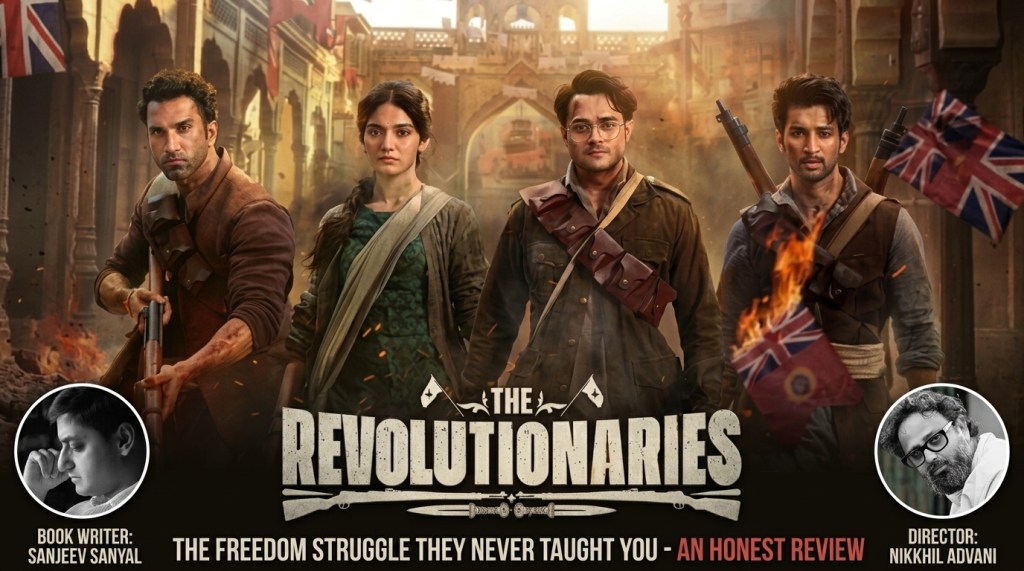
An honest review.
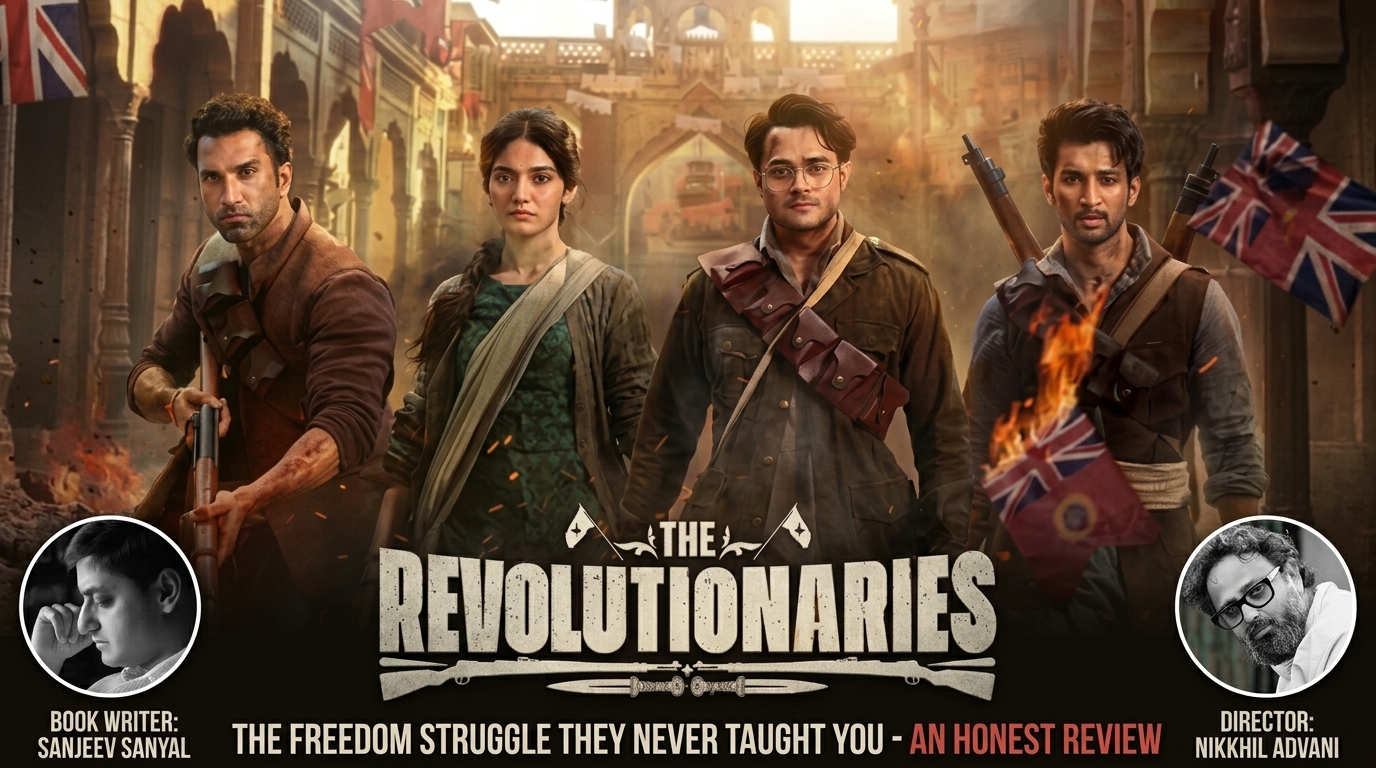
Somewhere around the third episode, my daughter paused the screen and asked the question that would echo through our house for the rest of the weekend: “Why didn’t we learn this in school?”
I had no answer. I have read most of these stories. I know how Rash Behari Bose walked away from the Delhi bomb. I know what Bagha Jatin did on a riverbank in Balasore. And still, watching it unfold with my family, I was stunned – because the version of history in our textbooks has a hole in it the size of a generation, and The Revolutionaries walks straight into that hole with a lit fuse.
We grew up on a tidy story. The Congress, the Mahatma, salt, spinning wheels, and a midnight tryst – that screen after screen has retold it.
The Revolutionaries rewinds to 1912. To a Delhi where a bomb lands on the Viceroy’s. To a Varanasi household of the Sanyals, no one knew that it quietly turns itself into a safe house. To Calcutta, Punjab, and the Ghadar network stretching across oceans, all working towards a single audacious plan: a nationwide armed mutiny to throw the British out a full three decades before they eventually left.
Nikkhil Advani has, over Rocket Boys, Freedom at Midnight, and now this, quietly built India’s most serious body of long-form historical drama. What sets him apart is the nerve. He does not make docudramas. He understands that a fourteen-year-old will not sit through a lecture but will absolutely sit through a heist.
So, The Revolutionaries is staged as an entertainer: slow-motion entries, a rousing score, spectacular set-pieces, an underground movement that plans, fails, adapts and plans again. The research underneath is meticulous. Thanks to Sanjeev. Advani has said he wanted to reach young people who have always stood against injustice. Judged by the questions coming from my living room, he has succeeded.
Some critics found this approach too glossy. I’d argue the opposite: the gloss is the point. A story this buried needs a loud entrance.
The gamble here was casting young, and it pays off handsomely. There were no thaka hua actors. Bhuvan Bam disappears into Rash Behari Bose. If you know him only from YouTube comedy, prepare to have that image dismantled. His Bose is restrained, watchful, and burning underneath. Rohit Saraf does the harder thing, shedding his chocolate-boy romantic persona for Sachindra Nath Sanyal, a boy who wants the revolution more than his family wants it for him. It is a performance of conviction held in check, and it grows on you, episode by episode.
Gurfateh Pirzada gives Bagha Jatin exactly the physicality the legend demands, and his action sequences carry real weight. Pratibha Ranta, as Pratibha Lahiri, is the quiet revelation – a reminder that women were not spectators in the armed struggle, and that their story has been even more thoroughly erased. Paoli Dam as Nanibala Devi adds spice to the ensemble.
And then there is Jason Shah’s Dyer: stuttering and sinister, despite a bit of overacting – even reviewers who disliked the show conceded his compelling presence. Menace, delivered with nuance.
The cinematography and the shoot across Varanasi, Lahore, Dehradun and Mumbai show in every frame. Ashutosh Phatak’s score – especially the recurring Vande Mataram motif lands where it should: in the chest. The writers take the sprawl of Sanjeev’s book and shape it into a thriller with a spine.
Is fact blended with fiction?
Of course – for drama, and necessarily so. But as Sanyal himself has pointed out, the moments you’ll swear were invented are usually the ones that actually happened. Google them. You’ll see.
The second question my daughters kept asking was harder than the first: “Why were there so many traitors?”
The series does not flinch from it. Informers, colleagues who broke, families who paid for loyalty with everything they had. It is the most honest thing about the show – freedom was not won by a united people marching in step, but by a few who kept going while many around them looked away. The old school-assembly song that credits our freedom to ‘De di Hamein Azadi Bina Khadag Bina Dhaal’ starts to sound, after eight episodes, a monumental farce.
One final note. Sanjeev Sanyal, whose book this is, is the grandnephew of Sachindra Nath Sanyal. This is a family that gave itself wholesale to the cause and spent generations in the shadows of history for it. That the descendant has finally written the account, and that Advani has finally filmed it, feels like a debt being partly repaid. To the Sanyals, and to every family like them: we remain indebted.
Not every episode is perfect. Some subplots wander, and eight hours is a demand. But this is the rare series that leaves a family arguing at dinner about history – and then reaching for those books.
If you are under twenty-five, this is not a recommendation. It is a request. Watch it.
Watch it with your parents. Then ask them the same questions mine asked me and watch them run out of answers too. That silence is where the real history begins. When is the next season coming?


Leave a Reply