In the high-walled echo chambers of Lutyens’ Delhi, where the coffee is artisanal and the political theories are increasingly ornamental, a new narrative has been polished for public consumption.
In 2018, the Ex-BBC journalist, Tufail Ahmed came with a similar post: “BJP systematically excluding Muslims, marginalized groups from poll process.”
It was immediately rebutted by yours truly. Here: Tufail Ahmad’s post is not only totally misplaced but a disservice to the community.
This time, it comes from the veteran pen of Shekhar Gupta. The thesis? A mournful, almost elegiac proclamation that the “Muslim voters no longer matter to BJP. Only a new Hindu-led coalition can challenge Modi-Shah.”
It is a classic Gupta piece: smooth, authoritative, peppered with the kind of sociological gravitas that makes one almost forget to check the math. But beneath the sophisticated prose lies a logic so inverted that it borders on the surreal. To suggest that the BJP has “systematically excluded” the Muslim voter is to ignore the most glaringly obvious dynamic of the last decade: it is not the BJP that has made the Muslim voter redundant; it is the Muslim voter’s collective, stubborn refusal to engage with the BJP that has rendered their traditional “veto power” a relic of the past.
The Myth of the “Excluded” Suitor
Gupta’s premise hinges on the idea that the BJP has walked away from the secular table, leaving the Muslim community stranded. This is akin to a suitor being rejected, ghosted, and publicly maligned for twenty years, only for a “senior journalist” to eventually point a finger and cry, “Look! The suitor has stopped bringing flowers! How exclusionary!”
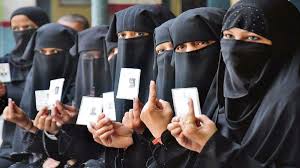
Let us look at the facts—the “stubborn things” that rhetorical flourishes cannot hide. In every election cycle since 2014, the data from the CSDS and various exit polls tell a consistent story. The Muslim community votes with a singular, laser-focused objective: to defeat the BJP at any cost. Whether it is tactical voting for the SP-BSP combine in Uttar Pradesh, the TMC in Bengal, or the Congress elsewhere, the community’s voice is not just a “choice”—it is a blockade.
When a demographic makes it a point of communal pride to ensure your defeat, it is not “marginalization” if you stop centering your strategy around them. It is called basic electoral arithmetic. The BJP has simply stopped chasing a shadow that refuses to be caught.
The Bengal “Victory” and the Fallacy of Secularism
Shekhar points to the recent Bengal results as a harbinger of a “Hindu-led coalition” being the only hope. But Bengal is actually a masterclass in why Gupta’s logic is flawed. In Bengal, the BJP’s rise from a fringe player to the primary opposition was fueled by a reaction to the very “secular” politics Gupta champions. When the TMC consolidated the Muslim vote with surgical precision, the counter-consolidation was inevitable.
The tragedy of the “secular” argument is that it views Hindu consolidation as a “threat to democracy” while viewing Muslim consolidation as “strategic survival.” Gupta suggests that the BJP has “othered” the community, yet he fails to mention that the community has treated the BJP as “untouchable” long before the term “Modi-Shah” was a household name. You cannot spend decades treating a party as a pariah and then complain when that party builds a winning house without your bricks.
The “Service” of Disservice
Following in the footsteps of Tufail Ahmad, Shekhar’s rhetoric does a profound disservice to the very community he claims to analyze. By reinforcing the idea that Muslims are “victims” of a system that no longer needs them, these commentators encourage a siege mentality. They ignore the reality of “Sabka Saath, Sabka Vikas”—the fact that gas connections, housing schemes, and toilets do not ask for a religion on the application form.
If the “Muslim voter no longer matters,” it is because the “Muslim Veto” has been broken by a more potent force: the aspiration of the “Mandal and Kamandal” coming together under a developmental umbrella. The BJP has proven that you can win a mandate—and a massive one at that—by focusing on the majority that wants to vote for you, rather than the minority that has made “Anti-BJP-ism” its primary political identity.
The Sarcasm of “Secular” Math
Shekhar’s suggestion that only a “Hindu-led coalition” can challenge the BJP is the ultimate admission of defeat for the old-school secularist. It is a sarcastic twist of fate: after decades of telling us that “identity politics” is the bane of India, the high priest of Indian journalism is now suggesting that the only way to save “secularism” is… better Hindu identity politics?
The irony is thick enough to cut with a knife. The elite media spent years mocking the BJP for being a “Brahman-Bania” party. Now that the BJP has successfully integrated the OBCs, the Dalits, and the tribal heartland into a behemoth electoral machine, the critics are pivoting. Now, the complaint is that the BJP is too successful at building a coalition, and the only solution is to build a rival “Hindu” version of it.
The Road Ahead: Engagement or Entrenchment?
If we are to talk about facts, let us talk about the “untouchability” factor. It is the BJP that has fielded candidates, reached out via Pasmanda outreach programs, and attempted to break the “vote bank” mold. In return, the response from the “community voice” has been a resounding “No.”
In 2014, Bhagalpur rejected Shahnawaz Hussain (a sitting MP and the youngest ever Cabinet Minister) not for his record, but because the community voted en bloc for a non-Muslim RJD candidate specifically to defeat the BJP. When you consistently prefer a non-Muslim from any party over a Muslim from the BJP, it isn’t “survival” – it’s a boycott.
Politics is a two-way street. If the Muslim community finds the BJP “untouchable,” they have every right to express that at the ballot box. But they, and their defenders in the press like Gupta, cannot then claim they have been “excluded” from the process. You are not excluded from a party you refuse to attend.
The reality is that the BJP hasn’t excluded Muslims; the Muslim leadership has excluded the BJP. And the BJP, instead of sitting in a corner and sulking—as the Congress did for decades—simply moved on to find a new path to 303 seats.
Conclusion
Shekhar Gupta’s piece is a classic example of “Coup Theory” applied to electoral politics—an attempt to explain away a massive democratic mandate as a dark, exclusionary plot. But the voters—the real ones, not the ones in the Khan Market cafes—know better.
The BJP has made it clear: they will serve everyone, but they will not be held hostage by a veto that refuses to acknowledge their existence. If Gupta wants to find the reason why the Muslim vote “no longer matters” in the way it used to, he doesn’t need to look at the PMO. He needs to look at the voting patterns of the last ten years, where the community chose to be a “block” rather than a “bridge.”
In the end, democracy is about numbers. And as long as the “secular” intelligentsia continues to trade in rhetoric while the BJP trades in results and arithmetic, the result will remain the same. The “National Interest” would be better served by admitting that the old gatekeepers have lost the keys to the kingdom.


Leave a Reply