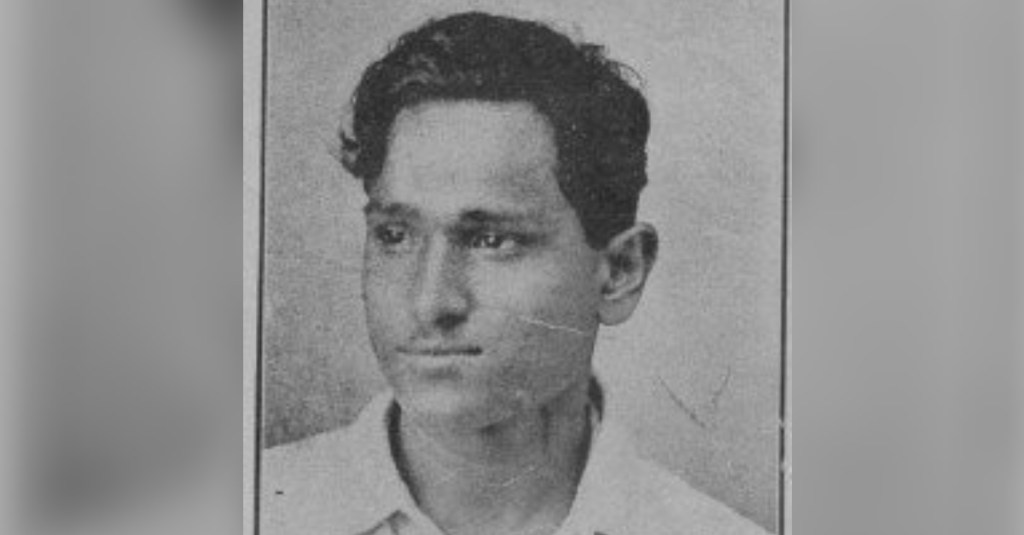
Independent India has repeatedly failed its heroes. The great son of India, Batukeshwar Dutt is one such revolutionary freedom fighter. His heart-wrenching story exemplifies how easily the Nehru-Gandhi establishment not just forgotten them but how shabbily it treated our bravehearts post-independence.
Even after decades of Independence, the political and historical space has been reserved for Gandhi and Nehru and subsequently the Chinese Gandhi family members.
Batukeshwar Dutt was born to Goshtha Bihari Dutt and Kamini Devi on 18 November 1910 at Oari Village Bardhaman district of West Bengal.
Batukeshwar completed his education in Kanpur from Theosophical High School and Prithvinath Chak High School, where he came in touch with his revolutionary friends. He was also known as BK, Battu, and Mohan.
During his teenage, an Indian child was being severely beaten by a British on Kanpur’s Mall Road, only because he had dared to venture onto a road where the entry of Bharatiyas were banned. This incident left a deep impact on a BK, and he was moved for anti-colonial activities.
He, along with Bhagat Singh joined the Hindustan Republican Association (later HSRA).
At the age of 15, around 1925, Dutt moved to Calcutta where he took part in the Workers and Peasant Party’s activities. Once HSRA, which had disintegrated after the Kakori conspiracy, began regrouping under Chandrasekhar Azad and Bhagat Singh, Dutt returned to Kanpur to participate in HSRA’s activities.
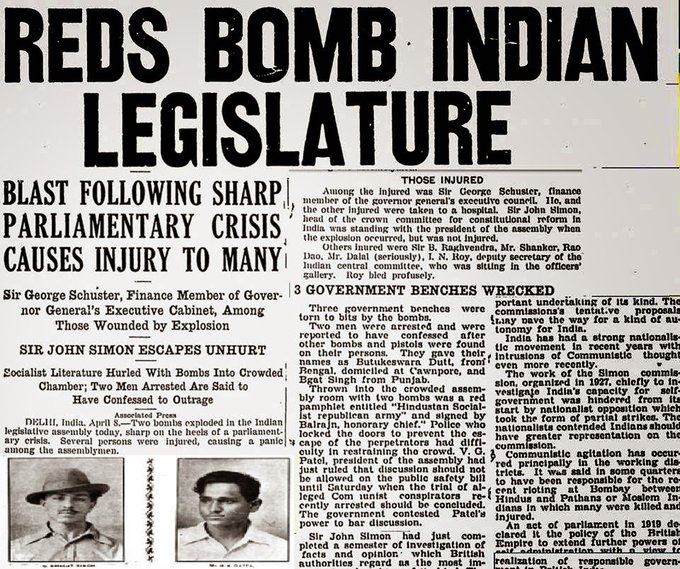
BK mastered the art of making bombs at various places where secret meetings of HSRA would take place. It was BK who made the bombs that were thrown at Delhi’s Central Legislative Assembly on 8 April 1929.
They were protesting the passing of legislation that allowed the police to take anyone into custody without a warrant or proof and also the British brutality that led to the death of Shri Lala Lajpat Rai.
Dutt’s lawyer Asaf Ali informed that Dutt got himself arrested even though he didn’t actually throw the bomb in order to stay with Singh. The intention of the revolutionaries was to inspire younger generations and hence they gladly accepted imprisonment.
“If the deaf are to hear, the sound has to be very loud,” stated Bhagat Singh and Batukeshwar Dutt at the trial for bombing the Delhi Central Legislative Assembly.
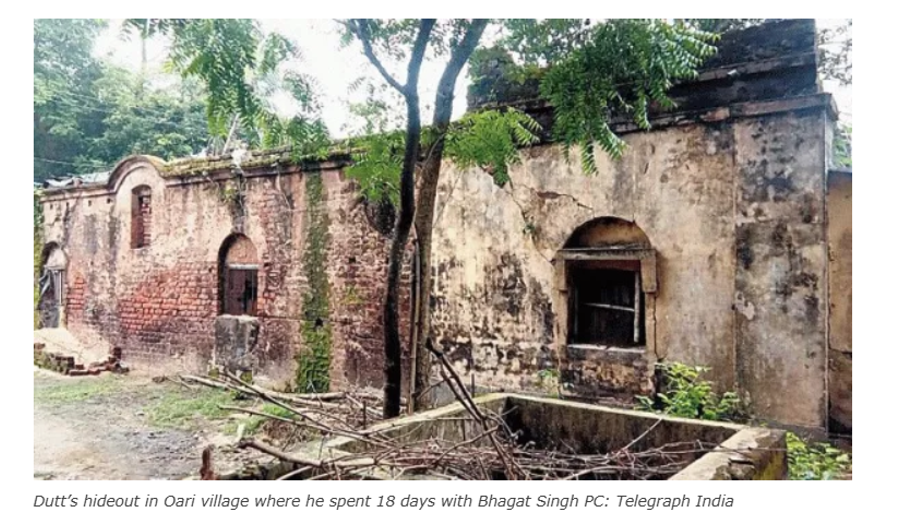
The place where revolutionaries including BK Dutt and Bhagat Singh spent 18 days planning the Central Legislative attack is in shambles today reflecting the callous attitude of Bharatiyas towards their heroes – those heroes who deserve honor and dignity at least in death.
Dutt along with Singh initiated a hunger strike while serving a jail term at Lahore Central Jail to protest against the despicable conditions of fellow prisoners. He had contracted the dreaded TB (tuberculosis) while serving his jail sentence. That, however, didn’t dampen his revolutionary spirit or the will to serve the country and set her free. Therefore, even after his release in 1942, he earned another jail term the same year for participating in the Quit India movement.
BK was sent to the Andaman Cellular Jail (Kala Pani) where he contracted the dreaded tuberculosis, but his revolutionary spirit wasn’t dampened. Even after his release in 1942, he earned another jail term for participating in the Quit India movement.
The treatment of these heroes who either laid down their lives or bore unspeakable horrors in a bid to free India is both heart-breaking and deplorable. Far from being celebrated, Batukeshwar Dutt led a life in oblivion post-independence making ends meet with great difficulty.
Batukeshwar had to resort to doing odd jobs to fend for his family while battling TB. The commissioner in Patna whom he had approached for a permit to start a bus service, wanted his proof of identity!! If that wasn’t enough, he couldn’t even find a hospital bed in Patna.
Freedom fighter Chamanlal Azad, who was Dutt’s friend, was extremely agitated at the plight of Dutt and is said to have shot an angry letter to a newspaper editor.
“God has made a mistake by producing a valiant man like Batukeshwar Dutt in India. He is struggling to stay alive in the very country for whose freedom he sacrificed his whole life” Azad said in his letter.
Following this, Punjab Govt offered to get him treated free of cost in Delhi. Unfortunately, the Bihar Govt didn’t allow him to go to Delhi until it was too late. When Dutt arrived at Delhi’s Safdarjung Hospital, he was diagnosed with cancer at AIIMS.
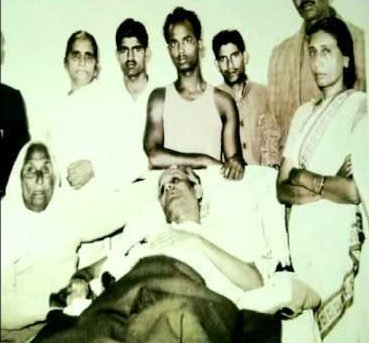
The Sapoot of Maa Bharti breathed his last on 20 July 1965. Keeping with his last wish, he was cremated at Hussainiwala where his revolutionary friends Bhagat Singh, Rajguru, & Sukhdev had been cremated.
Thus died a great revolutionary – Batukeshwar Dutt – uncelebrated and unrecognized even in death! Describes the apathy of independent Bharat towards its heroes – those heroes who deserve honour and dignity at least in death.
He is survived by his daughter Bharti Bagchi. No one knows her whereabouts. Do you?
 shwetank's-pad
Leave a comment